In this article
What the past five years taught us
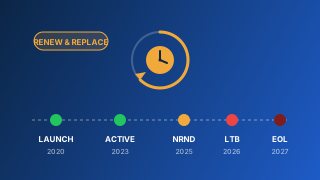
Two major shortages, a global pandemic, multiple regional conflicts, and accelerating obsolescence have exposed every weakness in lean component supply chains. The lesson is not 'abandon JIT' — it is 'stop pretending the future is predictable'.
Mapping your single-source risk
The first step is a one-page map of your BOM: which parts have one source, which have two, which have three or more. We routinely find that 60–80% of the bill-of-materials risk lives in 10–15% of the line items.
Diversifying without losing quality
Adding a second source is easy. Adding a second source that meets your quality bar is hard. Always qualify alternates before you need them — and we are happy to do parallel qualification testing for customers who ask.
When to use bonded inventory
- When the part is hard to find
- When your consumption rate is predictable
- When the part has a clearly declining production curve
- When the alternative is a redesign or line stop
Working with your distributor
The right distributor is a partner in resilience, not a transactional vendor. We share PCN feeds, run proactive BOM reviews, and keep bonded inventory for customers who need it. If your current supplier only quotes when you ask, it is time to talk.
Resilience is what happens between the easy projects and the next shortage. Build it now, while you have time.